
Local Link Building for Small Businesses: A Beginner’s Guide
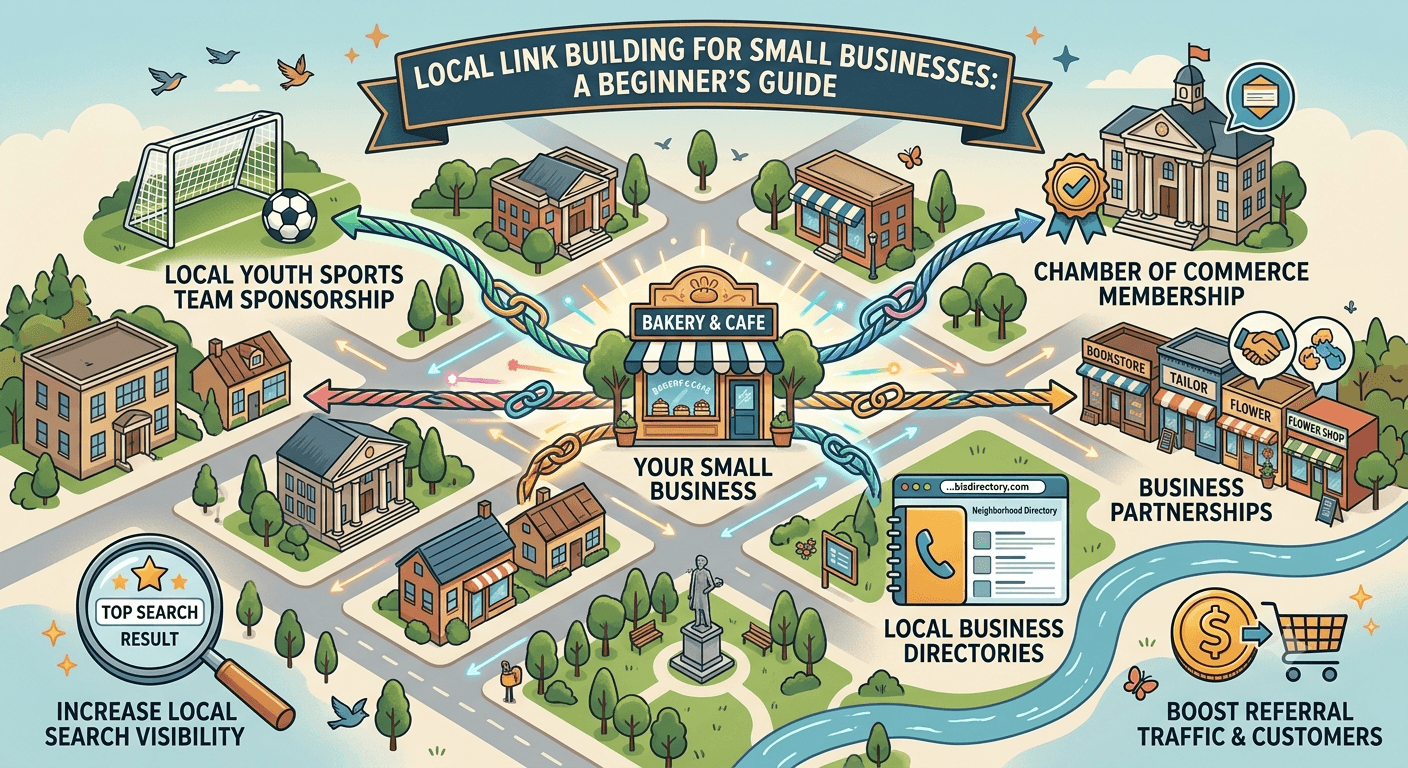
Link building has a reputation for being complicated, something reserved for big companies with dedicated marketing teams chasing links from major publications. For most small, local businesses, that reputation is misleading. Local link building looks a lot simpler, and honestly, more achievable, than people expect.
What Local Link Building Actually Means
At its core, a link is just a reference from one website to another. For a local business, the most valuable links often come from sources with genuine local relevance: community organizations, local news coverage, industry associations, and business directories that focus specifically on your area.
These links do two things at once. They give search engines another signal that your business is real and locally relevant, and they can send actual customers to your website through referral traffic.
Where Small Businesses Can Realistically Find Local Links
Start close to home. Sponsoring a local youth sports team, participating in a chamber of commerce, or partnering with nearby businesses for a joint event often naturally results in a mention and a link on someone else’s website.
Local directories are another straightforward option. A community-focused platform like hoodbizdirectory.com offers a direct, relevant place for a local business to appear, complete with a link back to the business’s own website, without requiring outreach to strangers or paid placements.
Avoiding Common Mistakes
The biggest mistake small businesses make is chasing volume over relevance, collecting links from unrelated or low-quality sites just to have more of them. A handful of genuine, relevant local links tends to serve a business better than dozens of irrelevant ones.
It’s also worth avoiding anything that feels like it’s gaming the system, like paying for bulk link packages from unrelated websites. These rarely help and can occasionally create more problems than they solve.
Conclusion
Local link building doesn’t require a marketing department or a big budget. It requires genuine community involvement and a handful of accurate, relevant listings. For most small businesses, that’s a realistic and sustainable place to start.
Frequently Asked Questions
There's no specific number to chase. A smaller number of genuinely relevant, high-quality local links tends to be more valuable than a large volume of unrelated ones. Focus on relevance to your industry and community first.
Yes, most directories include a clickable link back to your website alongside your business listing. Beyond any SEO benefit, these links can also send real visitors who are actively browsing for a business in your category.
It's generally best to avoid paid, unrelated link packages. They rarely provide lasting value and can sometimes create more problems than benefits. Genuine community partnerships and relevant local listings tend to hold up much better over time.
Results vary, but most small businesses see gradual improvement over a few months of consistent, genuine effort. It's a slow accumulation process rather than something that produces immediate, dramatic changes.